
Wenzhou summit connects young scientists to advance global cooperation
The 2026 World Young Scientist Summit (WYSS) opened in Wenzhou, east China's Zhejiang province, on Oct. 24, bringing together nearly 800 participants from more than 60 countries and regions to explore how young scientists can drive innovation and sustainable development.
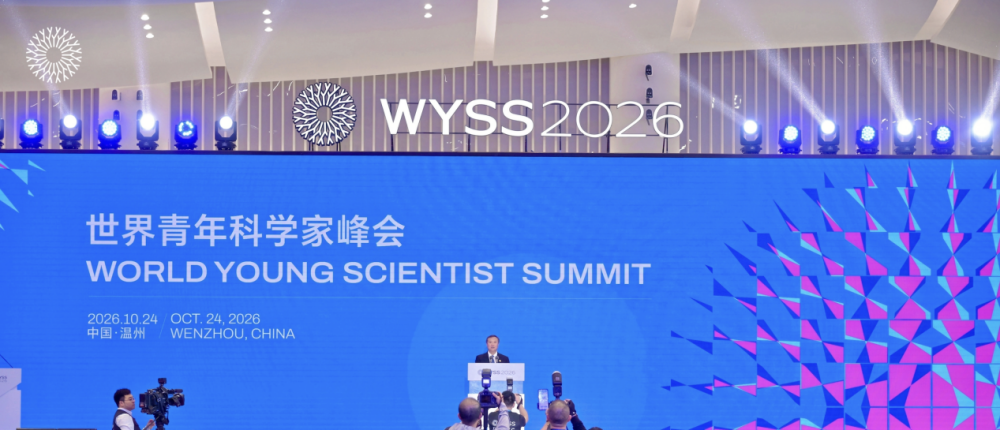
The 2026 World Young Scientist Summit opens in Wenzhou, east China's Zhejiang province, Oct. 24, 2026.
Jointly hosted by the China Association for Science and Technology (CAST), the Zhejiang provincial government and the World Federation of Young Scientists, the summit centered on this year's theme "Global Youth Action in the AI Era: Building a Sustainable Future."
The event combined academic discussions, talent support, research commercialization and international exchanges. Researchers under the age of 45 accounted for 88% of participants, underscoring the prominent role of young scientists in sharing research experience and exploring opportunities for collaboration.
Exploring new paths through interdisciplinary innovation
The WYSS featured keynote speeches on topics including education reform in the age of artificial intelligence, AI and processor chips, women's participation in science, and quantum computing. It also hosted 12 parallel forums covering fields ranging from future manufacturing and embodied intelligence to brain-computer intelligence, environmental science, and life and health.
Connecting knowledge and methods across disciplines was a key concern among participating young scientists.
César de la Fuente, a scholar at the University of Pennsylvania and a recipient of this year's Young Scientist SDGs Award, described how his team combines expertise in computer science, engineering, biology and chemistry to accelerate the discovery of new antibiotics using AI.
"I often think that the greatest advances in science happen at the intersection between fields, at the edges between fields," he said, highlighting the importance of collaboration among researchers with different areas of expertise.
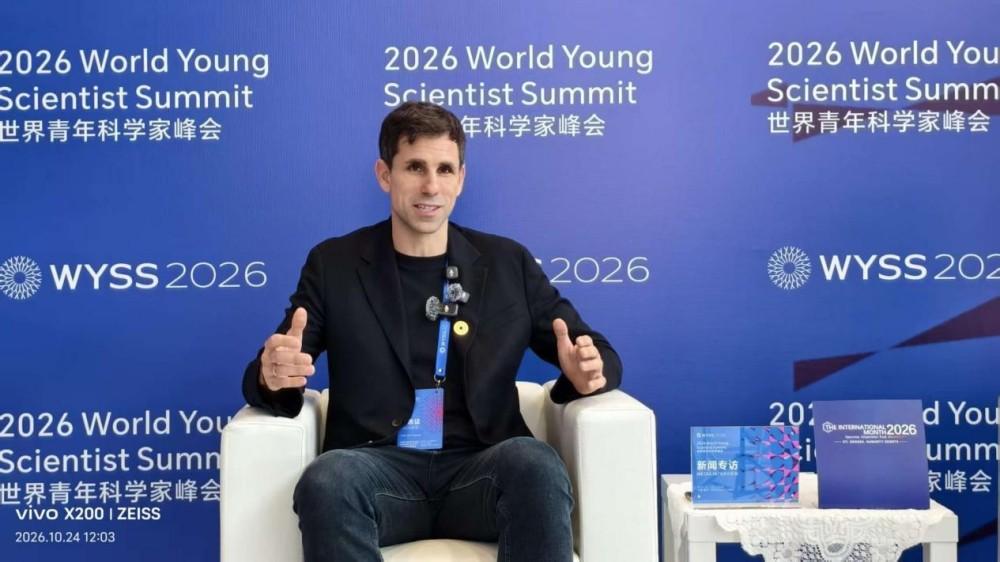
César de la Fuente, a scholar at the University of Pennsylvania and a recipient of the 2026 Young Scientist SDGs Award, attends the 2026 World Young Scientist Summit in Wenzhou, east China's Zhejiang province, Oct. 24, 2026.
Interdisciplinary innovation requires not only technological tools but also a deep understanding of the challenges facing specific fields.
Yuan Yang, assistant to the dean of the Institute for Interdisciplinary Information Sciences at Tsinghua University, said researchers should not simply seek applications for existing tools. Instead, they need to identify the most pressing needs in their respective fields.
Solving important problems may require researchers to delve deeply into a particular discipline and identify the key questions that need to be addressed, he said.
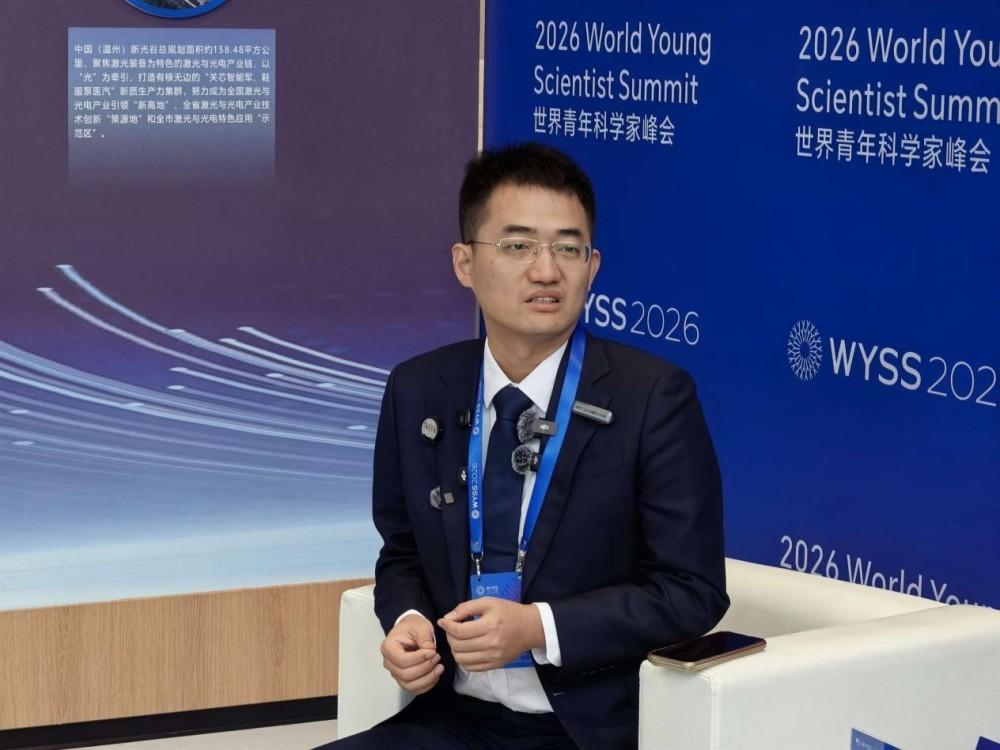
Yuan Yang, assistant to the dean of the Institute for Interdisciplinary Information Sciences at Tsinghua University, attends the 2026 World Young Scientist Summit in Wenzhou, east China's Zhejiang province, Oct. 24, 2026.
Strengthening support for young researchers
Creating conditions for young scientists to develop their careers over the long term was another focus of the summit.
Organizers released the Report on the Distribution and Mobility of Young Scientists in Embodied Intelligence and the Global Young Scientist Pioneers under 35 (WAYS-2035) List, and announced the winners of the 2026 Young Scientist SDGs Award.
The award went to de la Fuente; Wang Haotian, a professor at Tongji University; Liu Jue, a researcher at the School of Public Health at Peking University; and Nicola Segata, a professor at the University of Trento in Italy. Their research spans interdisciplinary AI and biology, electrochemistry and catalysis, public health, and the microbiome.
Support for young researchers also extended to academic publishing and entrepreneurship.
The WYSS Journal Partnership Program, launched at the summit, brought together 56 academic journals from 11 Chinese and international publishing organizations in its first cohort. The initiative will support young researchers through dedicated submission channels, special issues and columns, the development of young editors, and wider dissemination of research findings.
Also launched at the summit, the Global Young Scientists Innovation and Entrepreneurship Growth Support Program (2026) introduced a Spark Angel Fund worth 500 million yuan ($70 million) and unveiled the 2027 World Young Scientists Innovation and Entrepreneurship Competition.
Previously, the Chint Spark Program and the DAS-Security AI Spark Program had supported 11 young research teams working in areas including intelligent operation and maintenance of power equipment, integrated solar power and energy storage, and hydrogen energy materials.
These initiatives aim to help young research teams move from scientific exploration toward practical applications.
"If a project remains in the laboratory, its impact on society may not yet be fully realized," Wang said.
Translating research into industrial applications requires coordinated support for incubation, pilot-scale testing and large-scale deployment, as well as sustained assistance at different stages, he said.
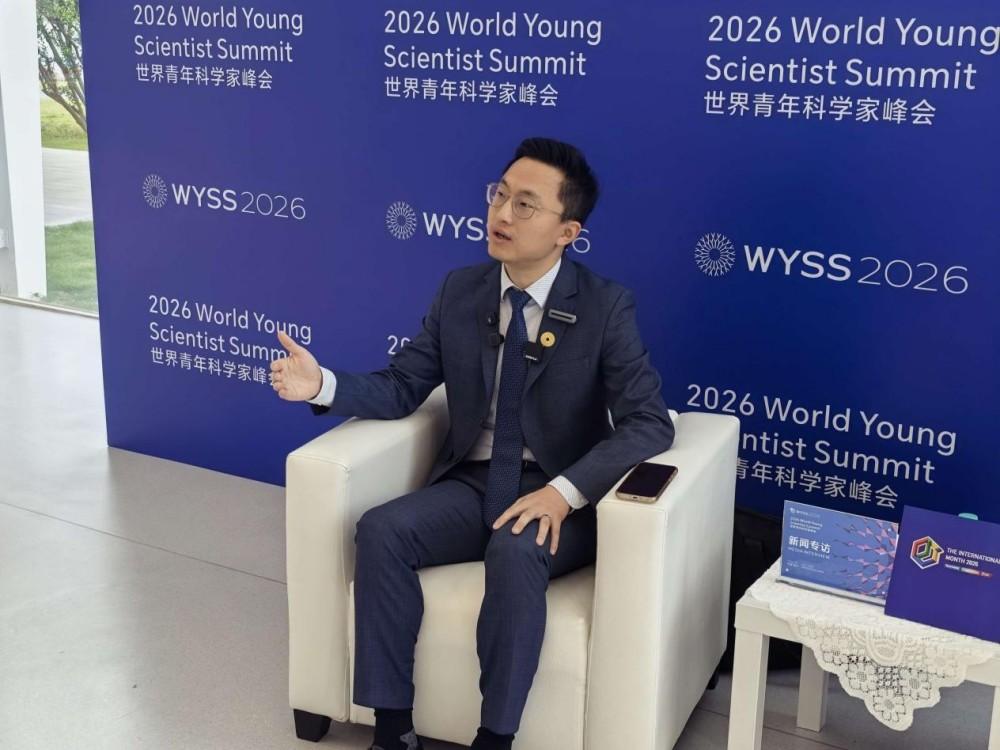
Wang Haotian, a professor at Tongji University and a recipient of the 2026 Young Scientist SDGs Award, attends the 2026 World Young Scientist Summit in Wenzhou, east China's Zhejiang province, Oct. 24, 2026.
Turning international exchanges into lasting partnerships
Connecting young scientists worldwide requires not only opportunities to meet but also ways to turn shared interests into concrete projects and lasting partnerships.
Alongside academic discussions, the summit featured the "Universal Gravitation π" exhibition and exchange activities showcasing future technologies and conceptual products, as well as local events and science and culture visits. These activities created additional opportunities for exchanges across disciplines, regions and sectors.
For participating researchers, such encounters offer opportunities to learn about research needs in other fields and identify problems they can tackle together.
"We see interesting problems and then try to see whether we can work together to solve them," Yuan said.
Learning about other researchers' work, the challenges they face and the theoretical tools they need can help young scientists broaden their perspectives and refine their research directions, he added.
International participants also found opportunities to explore new partnerships in Wenzhou.
Segata said receiving the Young Scientist SDGs Award had created an opportunity for him to connect with local researchers, align research needs and identify complementary strengths.
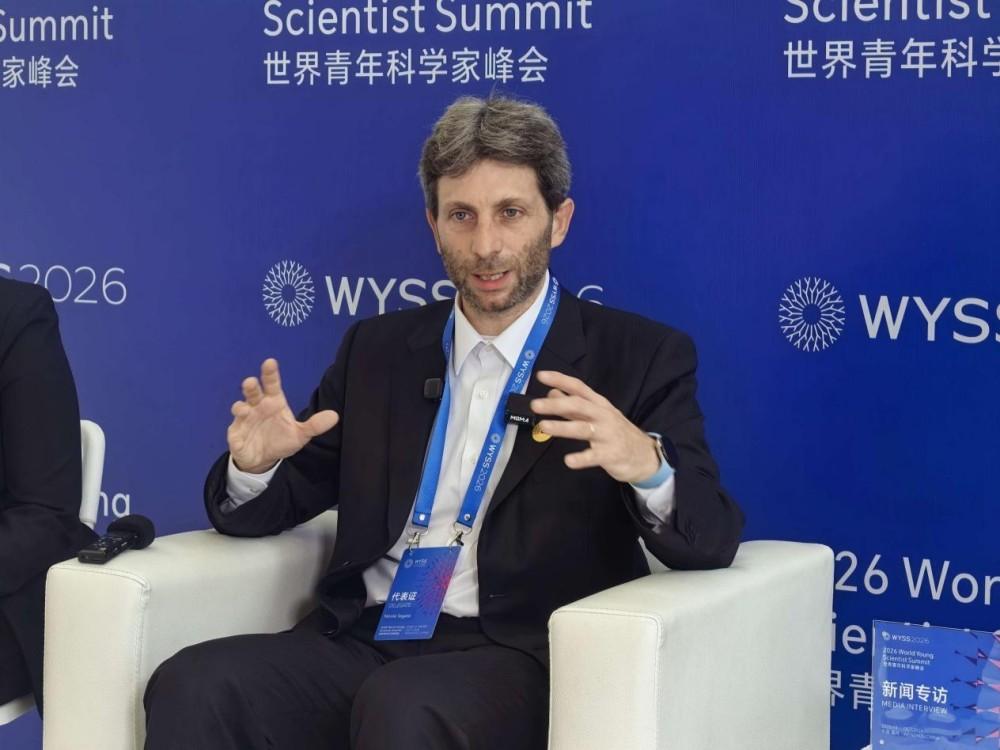
Nicola Segata, a professor at the University of Trento in Italy and a recipient of the 2026 Young Scientist SDGs Award, attends the 2026 World Young Scientist Summit in Wenzhou, east China's Zhejiang province, Oct. 24, 2026.
For de la Fuente, bringing together talent from different countries is an important foundation for interdisciplinary research.
"I'm very fortunate to be able to attract people from all over the world, including China, to come to our group," he said.