
Hou Fushen
Collaboration in five aspects is essential for long-term sustainable development of the auto industry. (By Hou Fushen)
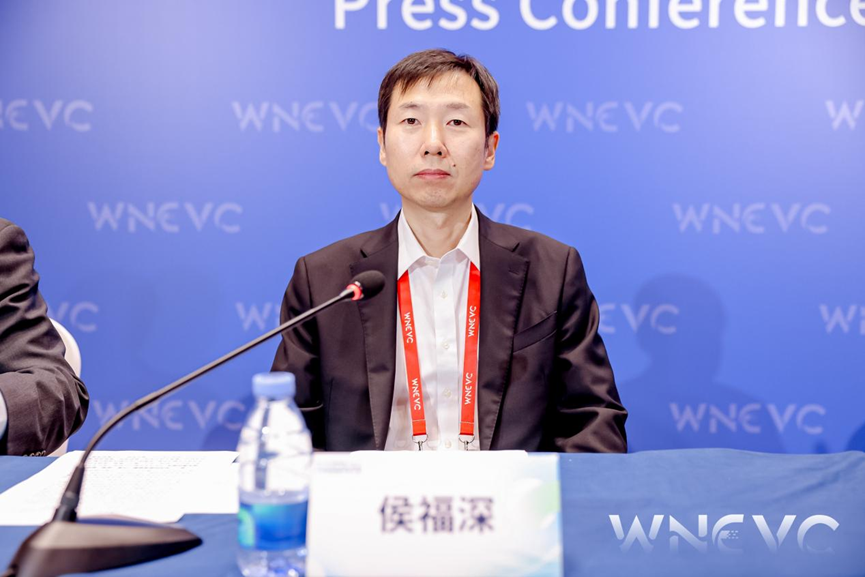
On September 29, the 7th World New Energy Vehicle Congress (WNEVC 2025) concluded in Haikou, Hainan Province. The event is part of the CAST International Month 2025: Openness, Cooperation, Trust.
At the closing press conference, Hou Fushen, Vice President and Secretary-General of the China Society of Automotive Engineers, pointed out that the automotive industry is undergoing a systemic transformation, characterized by accelerated technological iteration, the shift from old to new growth drivers, market structure adjustments, and industrial ecosystem restructuring. This has, at times, led to industry anxiety and instances of rash responses. In light of this, the WNEVC 2025 focused its theme on “Industrial Transformation and Sustainable Development,” aiming to guide the global industry to respond rationally to the changes and jointly explore a path for high-quality development.
Regarding how to promote the industry’s long-term sustainable development, Hou called for collaboration in five aspects:
1. Collaborative innovation to address “Involution” or rate race: As the automotive technology system evolves from mechatronics to the integration of “mechanics, electronics, computing power, and data,” cross-disciplinary and cross-sector collaborative innovation becomes crucial. It is essential to strengthen joint research efforts in cutting-edge areas like all-solid-state batteries, intelligent driving, and intelligent chassis, as well as in foundational fields such as automotive chips, operating systems, and artificial intelligence, to inject sustained momentum for innovation into the industry.
2. Integrated supply chains to enhance industrial resilience: Faced with the expansion of industrial chain participants and the restructuring of the value system, there is an urgent need to build a new, data-driven, and interconnected supply chain system. This involves achieving full-chain digital integration across R&D, production, supply, sales, and service to improve the risk resilience of the industrial chain.
3. Talent cultivation to solidify the foundation for transformation: The rapid development of intelligent, connected new energy vehicles demands more interdisciplinary talent. Efforts should be made to promote the restructuring of academic disciplines, deepen industry-education integration, refine the automotive talent evaluation mechanism, and establish a dual-track cultivation system combining “technical R&D and skilled operation” to ensure a precise match between talent supply and industry needs.
4. Joint standard setting for high-quality development: Standards are the “passport” for avoiding low-level competition and promoting sustainable industrial development. There is a need to accelerate the development of standards for frontier fields like all-solid-state batteries and automotive AI, increase support in standards for intelligent driving function classification, data security, among others, and to promote global mutual recognition of standards.
5. Jointly addressing global challenges through openness and cooperation: Sustainable development is a task for all countries. It is essential to adhere to the principles of openness, inclusiveness, equality, and mutual benefit. International dialogue and coordination should be used to resolve trade barriers and jointly build a new, fair, transparent, and non-discriminatory global automotive industry ecosystem.
Source: WNEVC, VOC