
China celebrates National Science and Technology Workers' Day
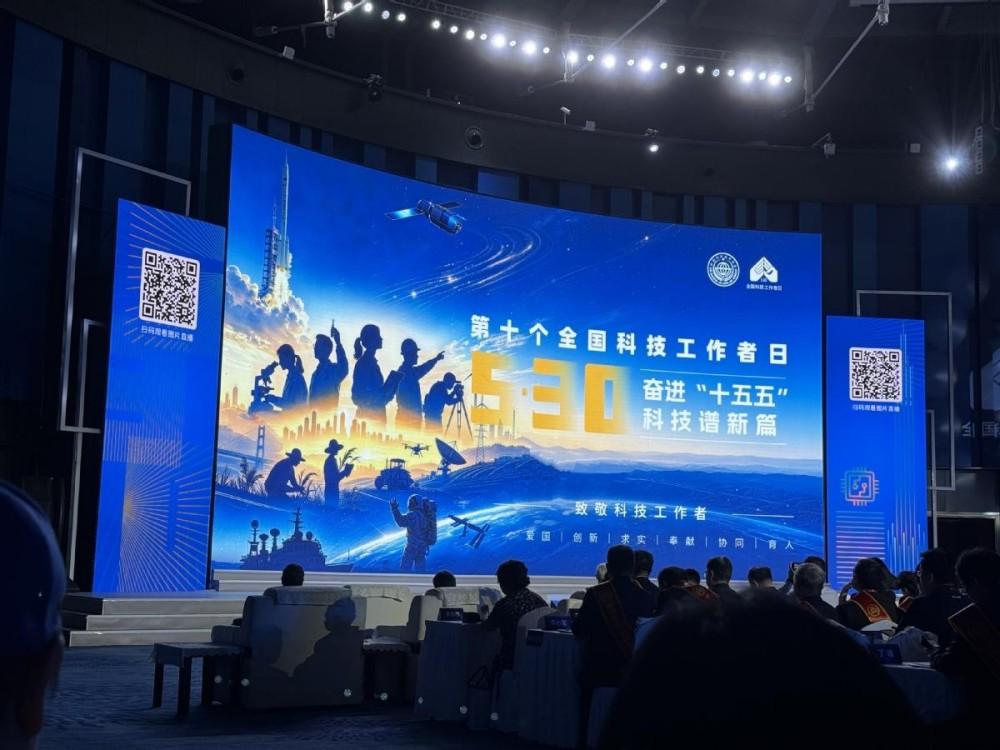
The main event of the series celebrating the 10th National Science and Technology Workers' Day is held at the National Communication Center for Science and Technology in Beijing on Saturday. [Photo by Li Menghan / chinadaily.com.cn]
China celebrated the 10th National Science and Technology Workers' Day on Saturday at the National Communication Center for Science and Technology in Beijing. Scientists, their families, and officials gathered to honor the nation's scientific pioneers and inspire future innovators.
"This day not only carries the glory and dreams of the scientific community, but also embodies the enthusiastic support and earnest expectations of the whole society for scientific and technological innovation," said Wan Gang,presidentof the China Association for Science and Technology, in the keynote address.
Wan emphasized that China is at a new historical starting point, embarking on the 15th Five-Year Plan (2026-30), with a focus on using scientific innovation to drive high-quality development. He urged scientists to seize the historical opportunity amid fierce global competition and accelerating technological revolution.
The event featured stories of four scientists, told through artifacts from the China Scientists Museum, representing different eras and fields of Chinese scientific achievement.
Mao Yisheng, a renowned bridge expert, designed and built the Qiantang River Bridge — China's first modern bridge — in the 1930s, only to destroy it to block the Japanese military advance during wartime. His daughter, Mao Yulin, shared her father's handwritten memoir, recalling his vow to build bridges that would never collapse after witnessing a bridge disaster that killed his friend.
Yu Min, a key contributor to China's "Two Bombs, One Satellite" program, left his familiar research field to work on hydrogen bomb development amid foreign technological blockades. His son, Yu Xin, presented a handwritten manuscript where Yu Min reflected on the values of indifference to material desires and maintaining tranquility.
Gu Fangzhou, known as the "Sugar Pill Grandfather", spent 43 years developing a polio vaccine in the form of a sugarcoated pill, making it accessible to every Chinese child. He tested the vaccine on himself and his own infant son before its widespread distribution, ultimately eradicating polio from China.
Tsung-Dao Lee, the first Chinese-born Nobel laureate, challenged established physics laws in an era dominated by Western academic discourse. His son, James Lee, shared science books gifted to his father by Chairman Mao Zedong in 1974, symbolizing the nation's respect for fundamental science and talent cultivation.
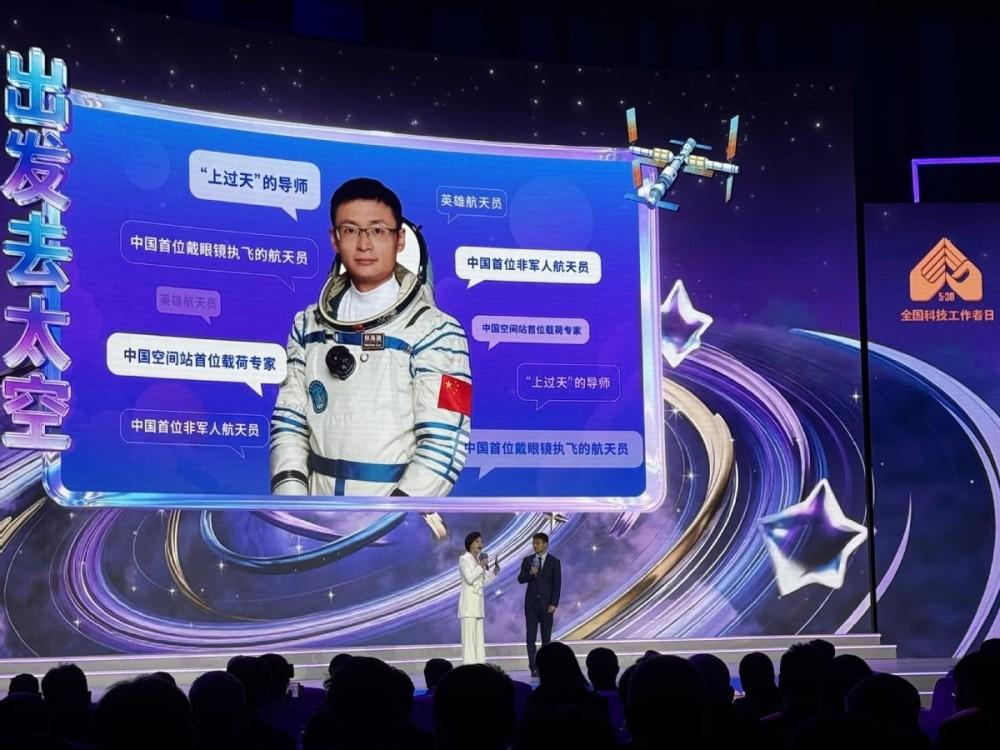
Gui Haichao, a professor at Beihang University and China's first payload specialist aboard the Tiangong space station, speaks at the main event celebrating the 10th National Science and Technology Workers' Day in Beijing on Saturday. [Photo by Li Menghan / chinadaily.com.cn]
The event also recognized recipients of the Fourth National Innovation Pioneer Award. Tang Zhiyong, a researcher at the National Center for Nanoscience and Technology, shared his views on the essential qualities of an excellent scientist. He emphasized the importance of persistence, innovation, and responsibility to serve national strategic needs.
The event honored the "Most Beautiful Science and Technology Workers" of 2026, including Gui Haichao, a professor at Beihang University and China's first payload specialist aboard the Tiangong space station. Gui spoke about the future of space robotics and China's space exploration ambitions, highlighting vast opportunities for researchers to align personal interests with national needs.
Source: http://www.chinadaily.com.cn/a/202605/31/WS6a1bf70ba310d6866eb4ba2b_2.html