
Telling the Story of the "Sugar Pill Grandpa" to the World | Commemorative Event for the 100th Anniversary of the Birth of Gu Fangzhou to be Held in Switzerland and France
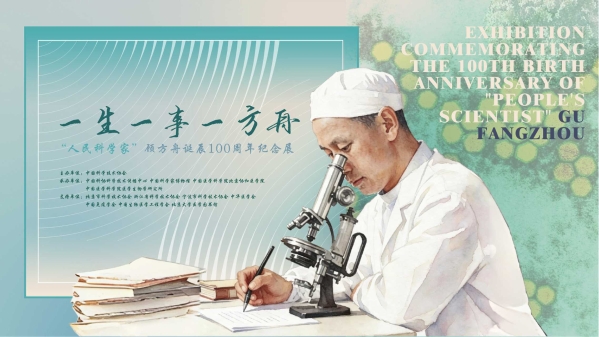
A single poliomyelitis vaccine sugar pill brought an end to the devastating polio epidemic that had plagued China for years, and one dedicated scientist devoted his entire life to offering China's solution to the global mission of eradicating polio. The year 2026 marks the centenary of Gu Fangzhou's birth. To honor his legacy, a commemorative event hosted by the China Association for Science and Technology will be held from July 14 to 17 in Geneva, Switzerland, and Paris, France. This marks the first time the themed commemoration has stepped beyond China's borders, sharing with the international community the inspiring story of Chinese medical and scientific professionals who have devoted themselves to safeguarding human health.
In the 1950s and 1960s, poliomyelitis (infantile paralysis) broke out on a large scale across China, leaving countless children at risk of lifelong disability or even death. At that time, China lacked mature vaccine technology, and the situation for the disease prevention and control was extremely difficult. At a critical moment, Gu Fangzhou was entrusted with the mission and took the lead in forming a research team. Rooted for years in the remote mountains of Yunnan, they persevered through immense challenges and ultimately succeeded in developing a polio vaccine sugar pill—affordable, easy for children to take, and highly effective. That small sugar pill completely turned the tables in China's fight against polio, enabling the nation to achieve the goal of becoming polio-free by the year 2000 and sparing tens of millions of children from the pain of disability.
Even as he achieved breakthroughs at home, Gu Fangzhou always kept the world in his heart. Since the 1970s, he has been deeply involved in the World Health Organization's global polio eradication initiative—on the one hand learning and absorbing advanced international virology and vaccine development technologies, and on the other hand generously sharing with the world China's practical experience in mass immunization at the grassroots level and in delivering low-cost, widely accessible vaccination. Addressing the challenges of limited medical resources in developing countries and the difficulty of administering medicine to children, the "sugar pill" model offered a practical, replicable solution. It provided vital guidance for polio prevention and control in many nations worldwide and has become a classic example of South-South cooperation.
Gu Fangzhou's scientific contributions and his spirit of dedication have won wide recognition across the international community. In December 2025, the 43rd session of the UNESCO General Conference approved the inclusion of the centenary commemorative events for Gu Fangzhou's birth in the official calendar of anniversaries for 2026-2027. He thus became the second Chinese scientist, after mathematician Liu Hui, to receive this international recognition. Countries including Cambodia, France, Italy, and Thailand expressed their support—fully affirming that the achievements of China's scientific community have gained broad international consensus.
A series of commemorative events has already been launched across China, drawing an enthusiastic response nationwide. Since June this year, a series of themed events has been held. Among them, the Institute of Medical Biology at the Chinese Academy of Medical Sciences launched the commemorative program "A Century-Old Ark of Hope · The Sweet Legacy of the Sugar Pill." The National Library hosted the memory-sharing program "A Lifelong Mission, Sugar Pills to Save Lives," and the China Scientists Museum launched the exhibition "One Lifelong Mission, One Ark of Hope — Gu Fangzhou Centenary Exhibition." Peking Union Medical College convened a special symposium and, together with the China Foreign Affairs University, co-hosted the 2026 International Symposium on Polio Eradication and the PUMCH Fangzhou Forum. These events offered a comprehensive review of Gu Fangzhou's scientific career and traced the development of China's polio prevention and control efforts.
To deepen people-to-people science diplomacy and put into practice the Global Civilization Initiative, the China Association for Science and Technology has built upon the achievements of the domestic commemorations to design this European tour exhibition. This tour in Switzerland and France will be accompanied by a diverse program of activities, including an opening ceremony, scientific and cultural exchanges, and themed commemorative exhibitions. Together, they will fully showcase Gu Fangzhou's spirit of perseverance and pragmatic innovation, while highlighting China's commitment to actively engaging in global governance and working hand in hand with other nations to safeguard human health.
Gu Fangzhou once said with humility: "I have only achieved one thing in my life, which was this little sugar pill." His simple words capture the lifelong pursuit of a medical scientist devoted to serving humanity. At the centenary of his birth, the story of the "sugar pill"—embodying the wisdom of China's scientists and the compassion of its physicians—has stepped beyond national borders. It continues to foster global exchanges among civilizations, contributing China's strength to the eradication of polio worldwide and the building of a community with a shared future for mankind.